
Lake Oswego Garage Door Guide
What Lake Oswego's Older Garage Doors Are Up Against
Most Lake Oswego garage doors date to 1964-2006, built before today's insulation codes. Here's what the cold, damp climate does to that stock and what to check.
- Licensed & Insured
- Same-Area Service Calls
- Upfront Pricing
What the Weather Here Does to It
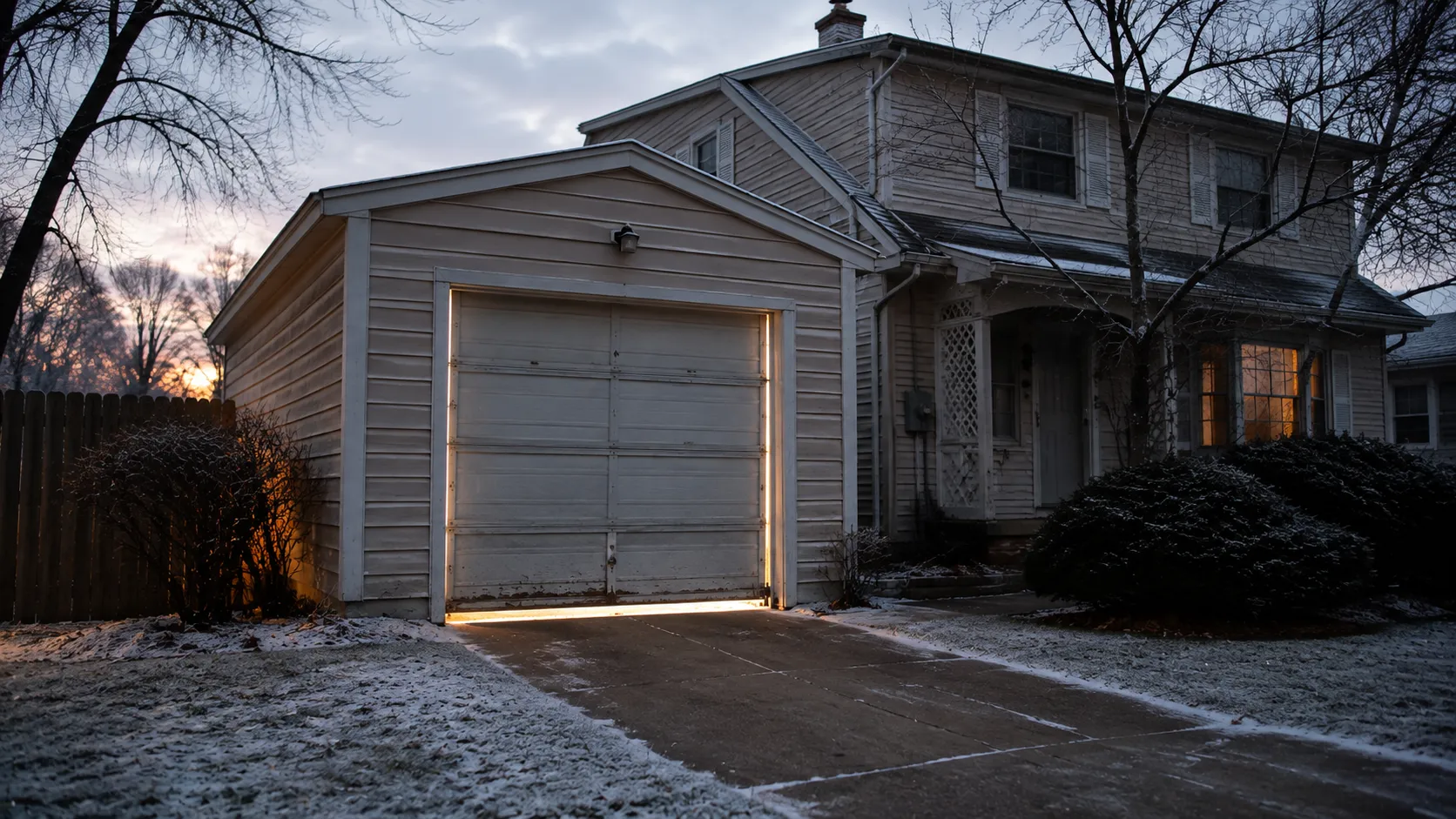
Lake Oswego sits in a cold-moderate climate band, which in practice means damp winters, freeze-thaw swings, and a lot of months where the garage never really dries out. That matters more here than it would somewhere drier, because most of the housing in this service area went up between 1964 and 2006, with the median build year landing in 1983.
A door built in 1983 was built before the insulation rules that govern garage doors today. That's not a knock on the door - it's just a fact about when the panel, the seals, and the framing around it were specified.
Uninsulated or thinly insulated steel panels from that era don't handle condensation the way a modern polyurethane-core door does. Moisture collects on the inside skin, the bottom seal hardens faster in the cold, and the track hardware - often original - has had four decades of damp Oregon winters to work on it. In neighborhoods like Palisades and Forest Highlands, both a couple miles from the core of town, you see a lot of this same-era stock: garages that were never meant to be conditioned space, with doors that were never meant to insulate much of anything.
None of this means the door is failing. It means the door is doing exactly what an early-1980s door was built to do, in a climate that's asked more of it every winter since.
The Problem
The problem shows up as symptoms, not as a labeled failure. A door that used to close flush now leaves a gap at the bottom corner.
A panel that used to look flat has a faint wave in it near the seam. The opener strains a little more on cold mornings before the metal and the hardware settle into their working temperature.
Across the roughly 34 named areas that make up this broader service territory - most built out in that same 1980s-90s window - the pattern repeats: original torsion springs and rollers, original bottom seals, panels with little to no thermal break. None of that was a defect when it was installed. It's simply pre-dates the building-code expectations that came later, the same way a house built before modern insulation standards has thinner wall cavities than one built today.
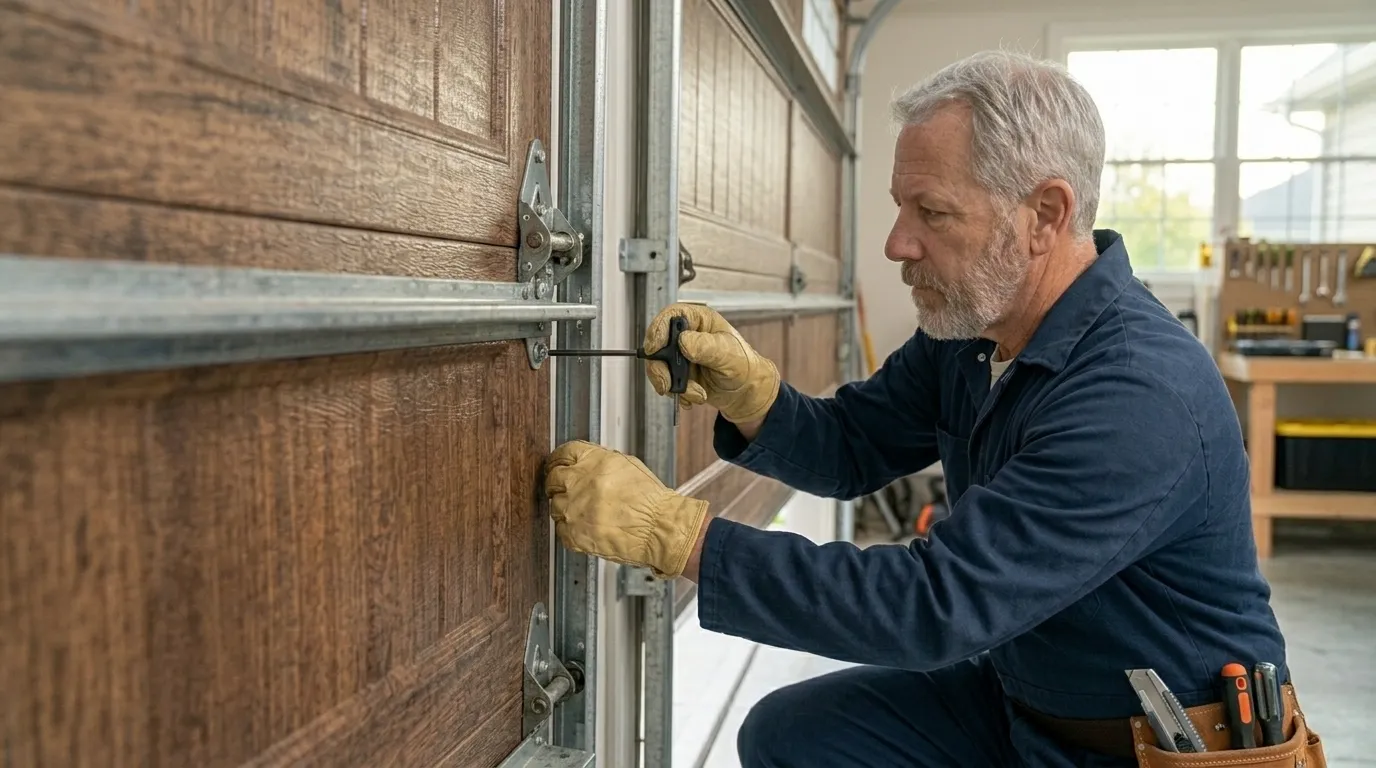
What pushes an old door from "fine" to "a call" is usually one of two things: the seal has hardened and cracked enough that daylight or draft comes through at the threshold, or the panel has enough flex in it that the track no longer holds it square. Either one is a maintenance item until it isn't - and once the track is out of alignment, the springs and rollers start wearing faster than they should.
What to Check
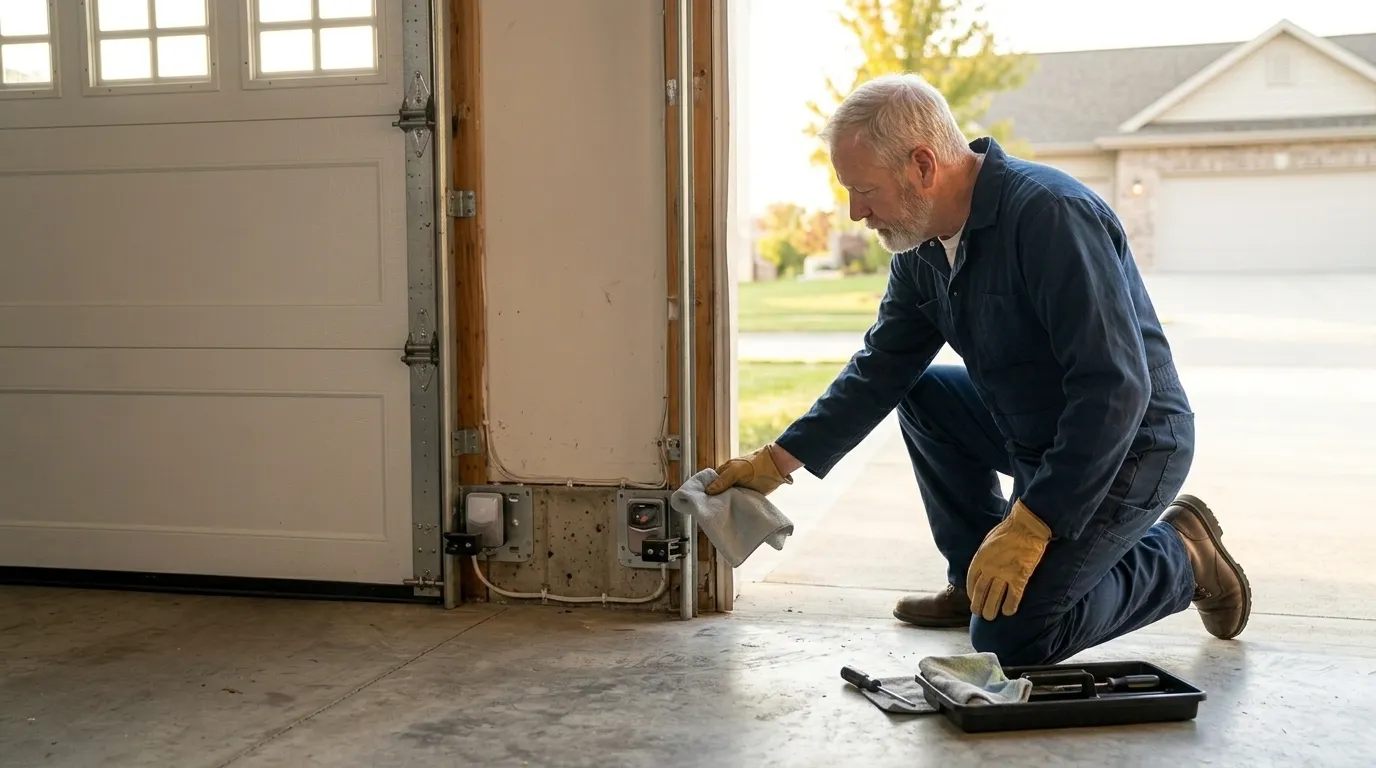
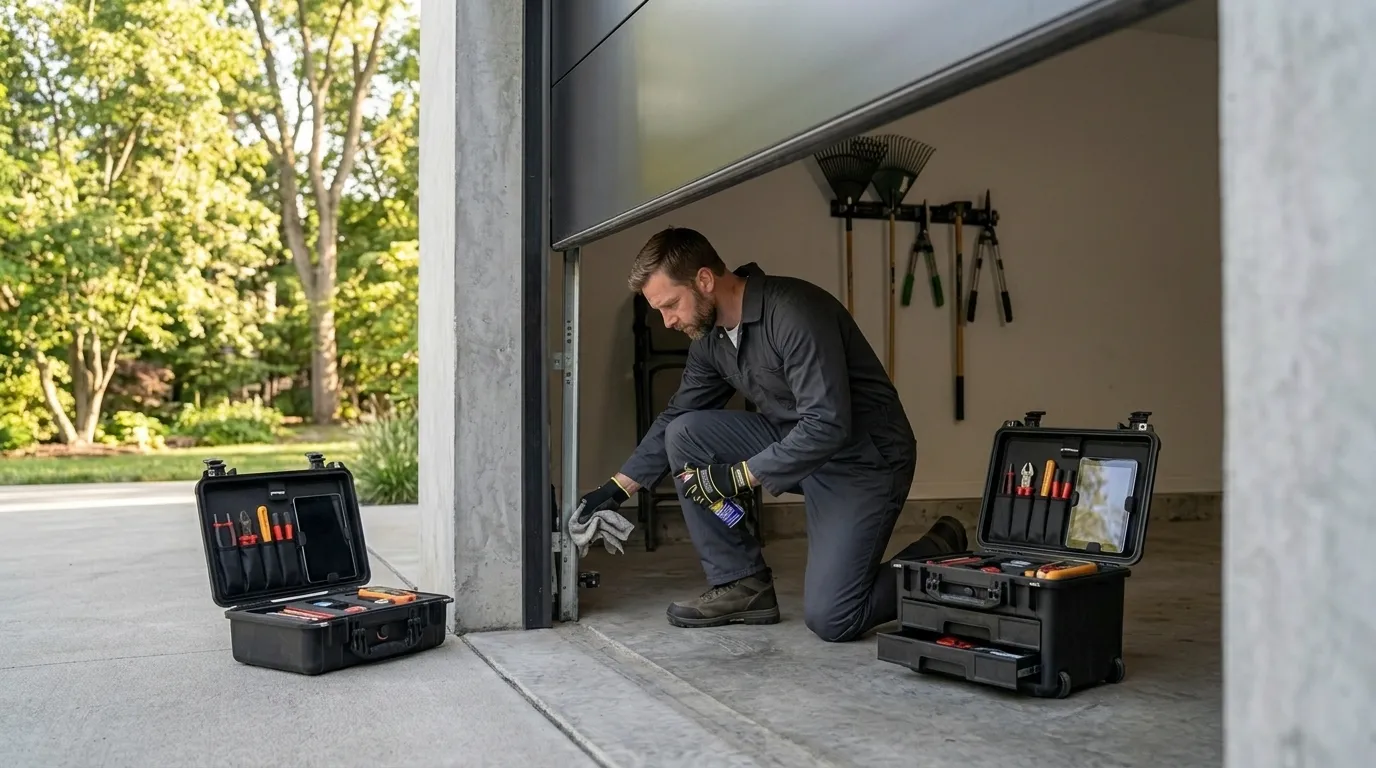
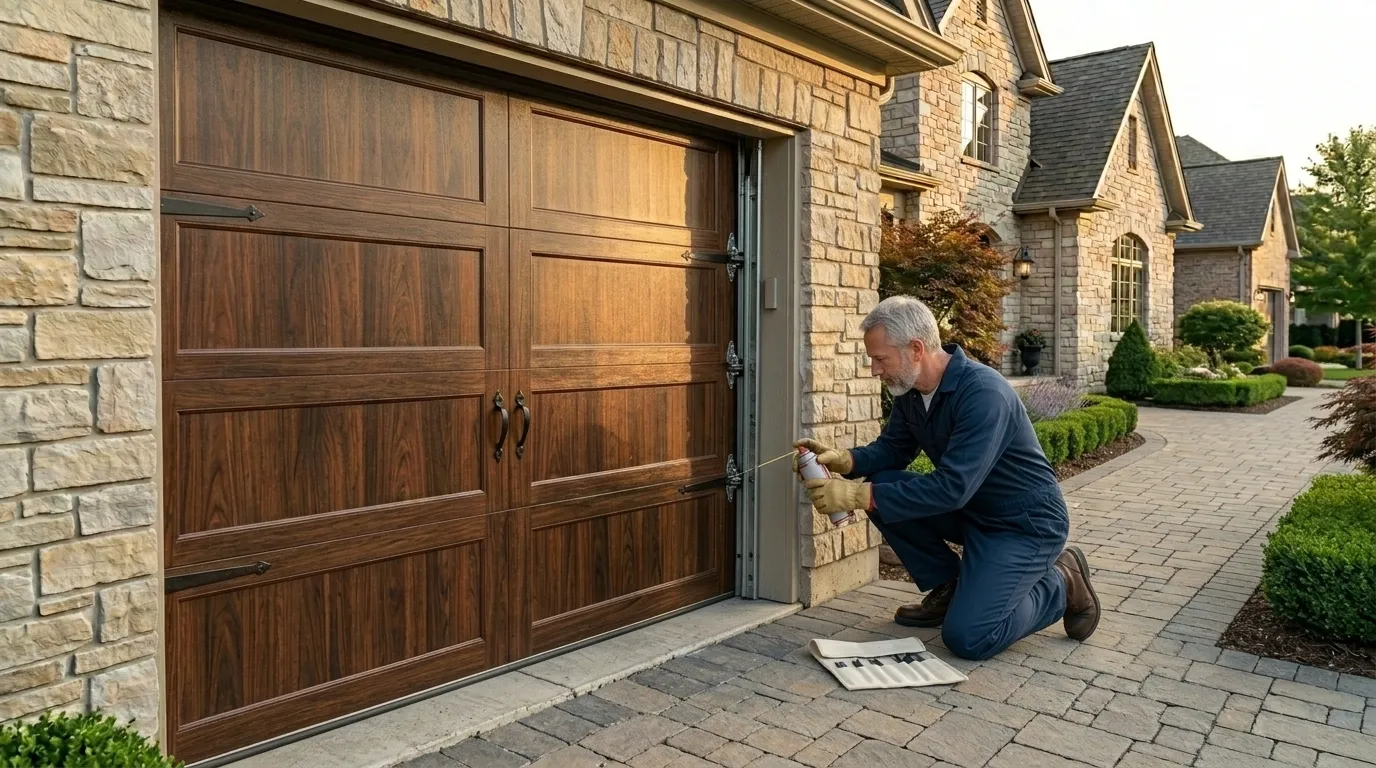
Start at the bottom seal. On a door from the 1964-2006 build window, this is the first part to go - it hardens in cold weather and loses its grip on the slab floor, which is exactly the kind of thing you'd expect on a house this age in a climate this damp. Run a hand along it on a cold morning; if it's stiff and cracking rather than pliable, that's your first sign of age catching up with the door.
Next, look at the panel seams under a flashlight, low light shows waviness that daylight hides. On an original steel door with no insulation core, moisture cycling in and out over 40 winters can telegraph as a slight ripple near the bottom two panels, where condensation collects.
Last, check the corner gaps with the door closed. If light comes through unevenly on one side, the track has likely shifted slightly out of square, common on original hardware that's never been reset. None of these checks require tools, just fifteen minutes and a flashlight, and they'll tell you whether what you're looking at is cosmetic age or a hardware problem starting to compound.
Leaving It Alone
Not every symptom on a door this age needs a truck out. A hardened bottom seal that still seals, just stiffly, can often wait a season, and a faint panel wave that hasn't gotten worse in a year or two isn't urgent. We won't tell you to replace a door that's still doing its job just because it's original to a house built in the 1980s.
Where it stops being optional is the track and spring side. Once a panel starts riding unevenly in the track, the springs are carrying uneven load every single cycle, and that wears the cable and rollers faster than normal use would. That's the kind of thing that goes from a minor fix to a full spring or panel replacement in a matter of months, not years, especially with a door already handling four decades of cold-damp cycling.
Our honest limit: we don't recommend insulating an old uninsulated slab door as a standalone fix. On a panel already this old, adding foam or a retrofit kit rarely outperforms just replacing the door with a modern insulated one, and we'll tell you that instead of selling you a patch.
How We Can Help
Garage Door Repair
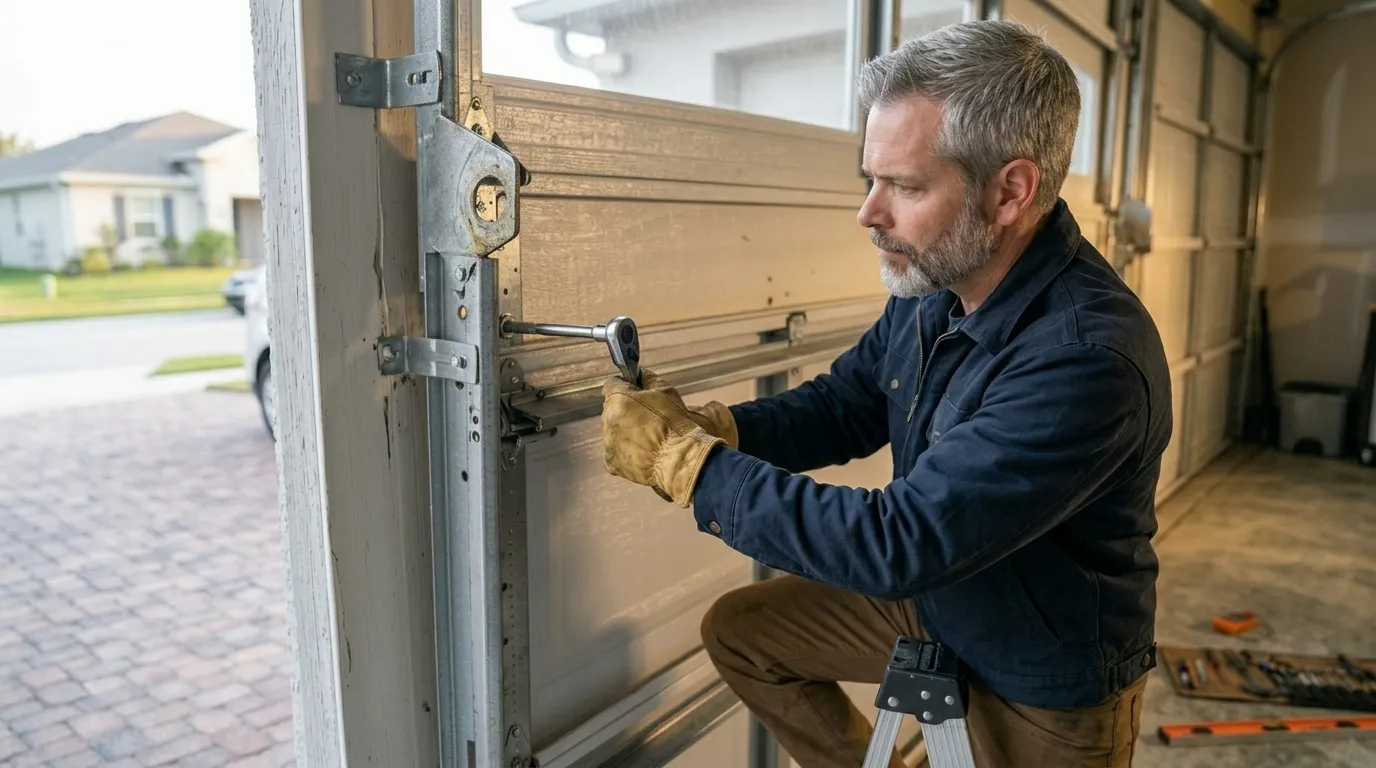
Springs, cables, tracks, rollers, and openers fixed by a tech who explains the problem before touching anything.
Learn more →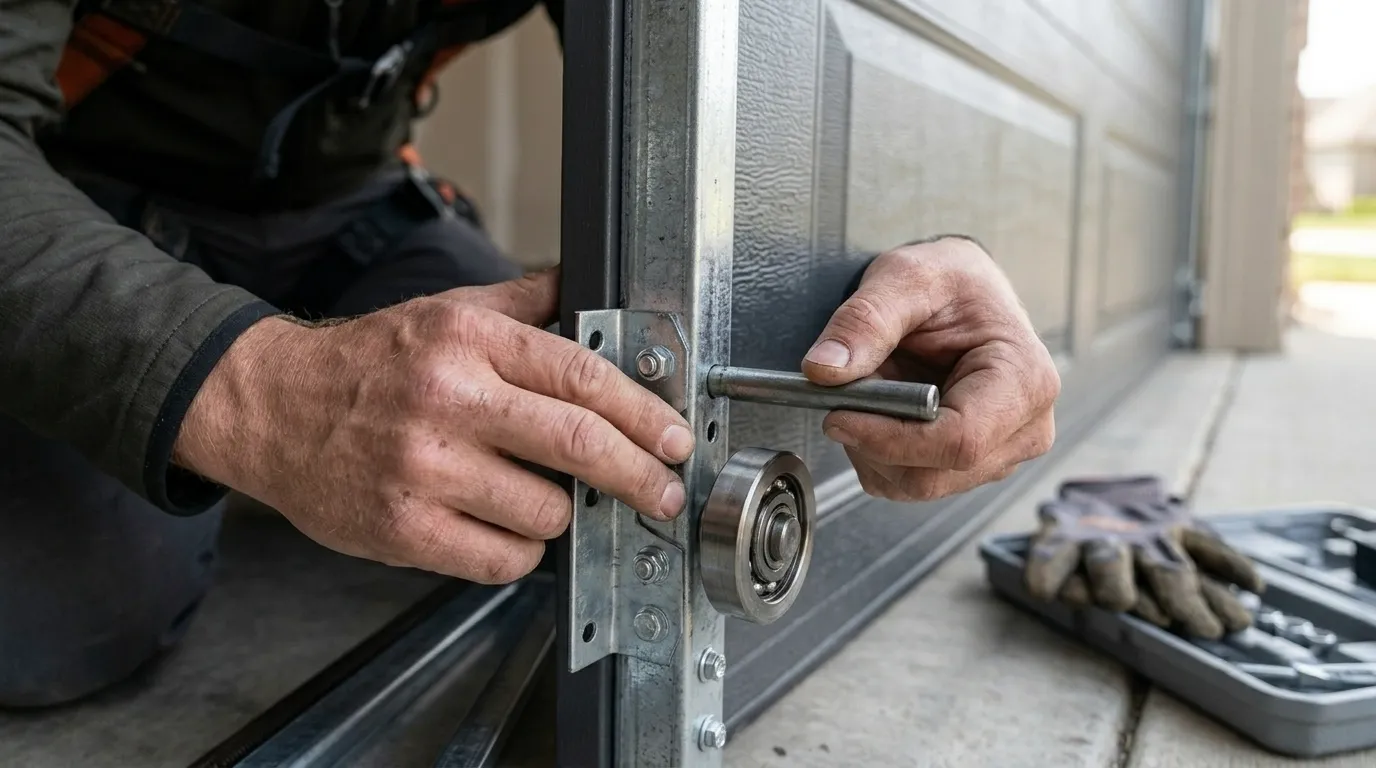
Garage Door Installation
New sectional doors sized and installed for the housing stock actually built in this area.
Learn more →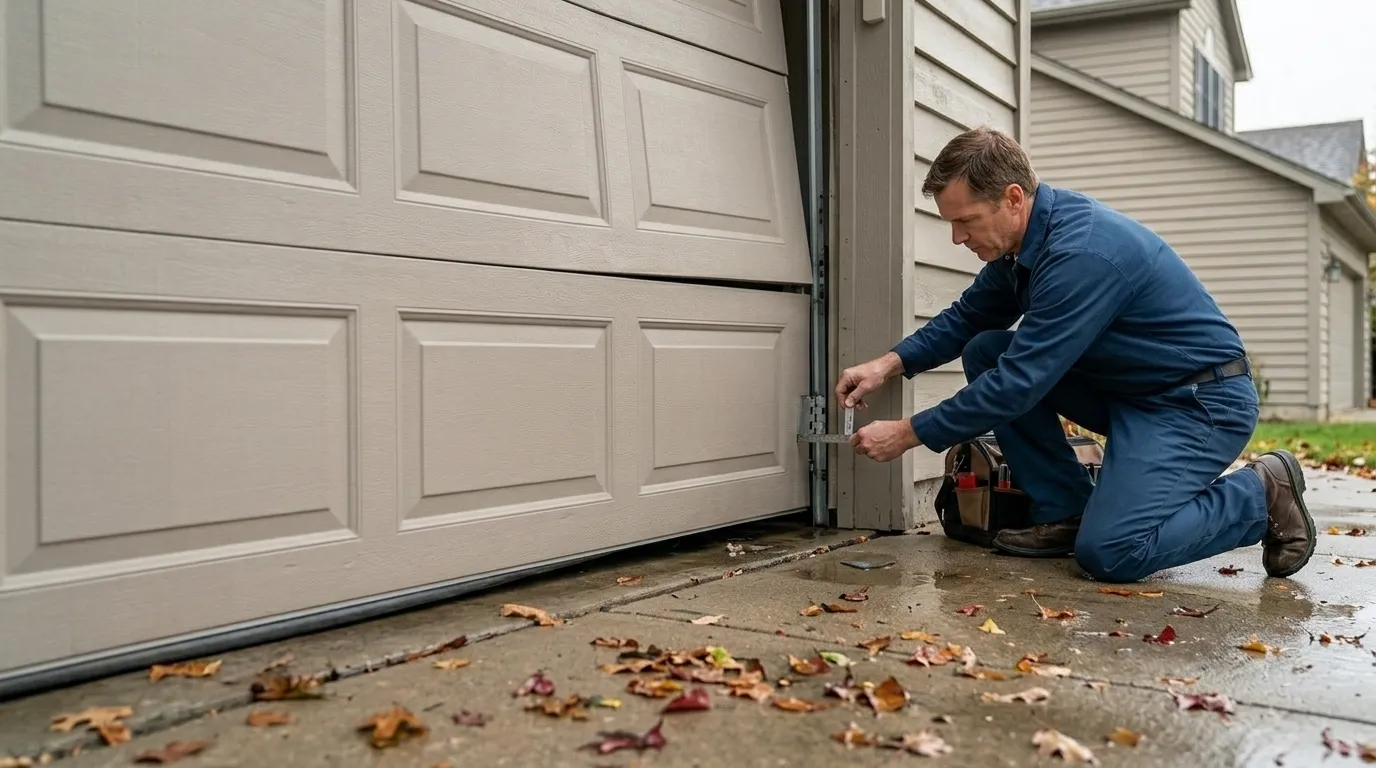
Garage Door Service
Tune-ups, lubrication, and safety checks that catch a small problem before it becomes a service call.
Learn more →Frequently Asked Questions
Why does my garage door feel drafty in winter but not summer?
If your house was built in the 1964-2006 window common to this area, especially the 1980s, the door likely predates current insulation standards. Steel contracts in the cold and the bottom seal stiffens, both of which open small gaps that you don't notice once the weather warms and the materials relax again.
Is the wave I see in my door panels a structural problem?
Usually it's cosmetic at first: condensation cycling against an uninsulated steel skin over many damp winters can create a slight ripple near the bottom panels. It's worth watching, but a faint wave that isn't worsening year over year generally isn't urgent on its own.
Should I insulate my old garage door instead of replacing it?
On a door already decades old, we usually don't recommend a retrofit insulation kit. It rarely performs as well as a modern insulated door, and on a panel already worn by years of cold-damp cycling, you're often better off putting that money toward replacement instead.
How do I know if it's the seal or the track causing my draft?
Check the bottom seal by hand on a cold day, if it's hard and cracked rather than pliable, that's likely your source. If the seal feels fine but you see uneven light at the corners with the door closed, the track has probably shifted out of square instead.
Have a Door That Needs a Second Opinion?
Call and describe what it is doing - we will tell you what it likely is.