
Lake Oswego Garage Door Guide
What We Actually Check When We Come Out
A look at what a Lake Oswego Garage Door Pros service call actually checks, tied to this area's 1964-2006 housing stock and cold, wet winters.
- Licensed & Insured
- Same-Area Service Calls
- Upfront Pricing
What the Weather Here Does to It
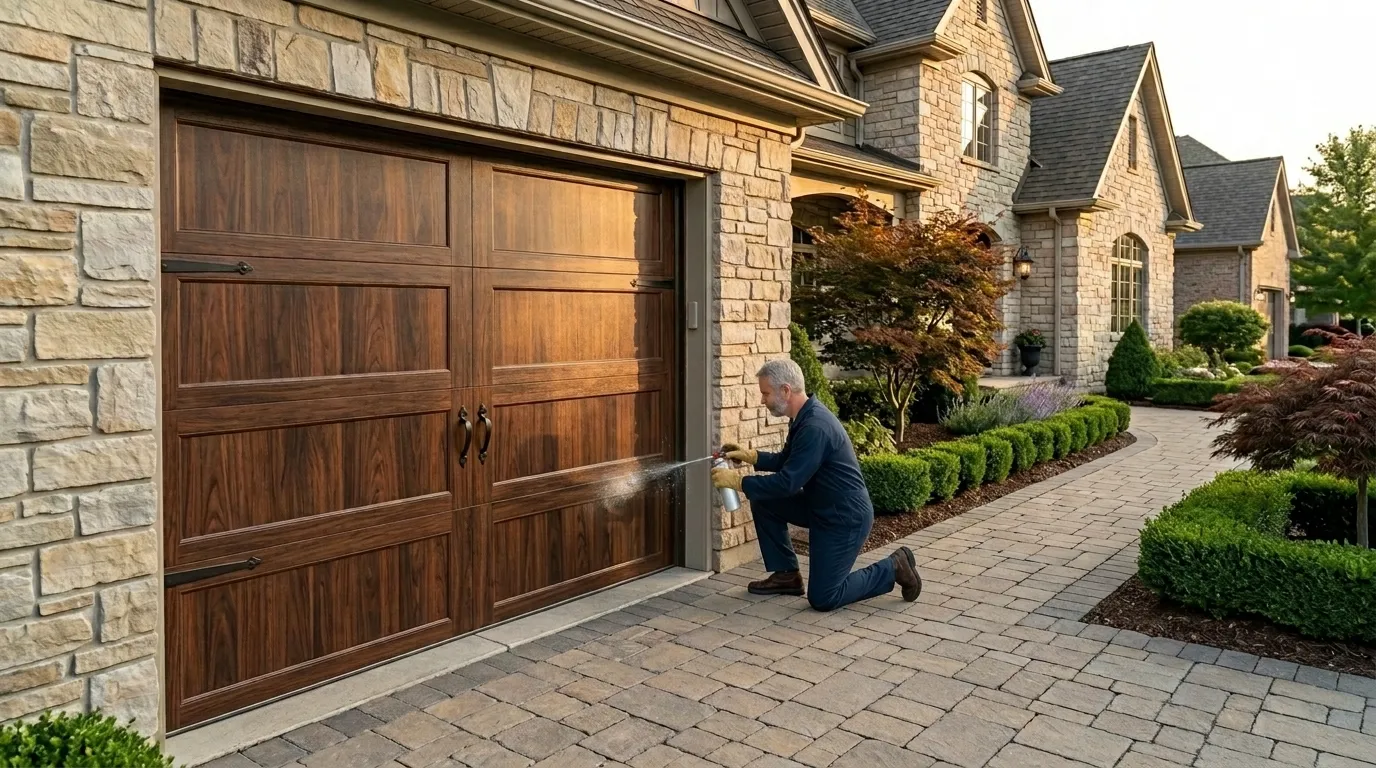
Lake Oswego sits in a cold-moderate climate band, and that means your garage door lives through repeated freeze-thaw swings every winter along with months of steady damp. That combination is hard on steel and hardware in specific ways. Track brackets that were torqued down in 1983 loosen as wood framing swells and shrinks with moisture.
Springs cycle through cold mornings when the metal is stiffer and more prone to fatigue cracking. Rollers built with cheaper nylon from the original install run dry faster in damp air, and the bearings inside them corrode from the inside out where you can't see it.
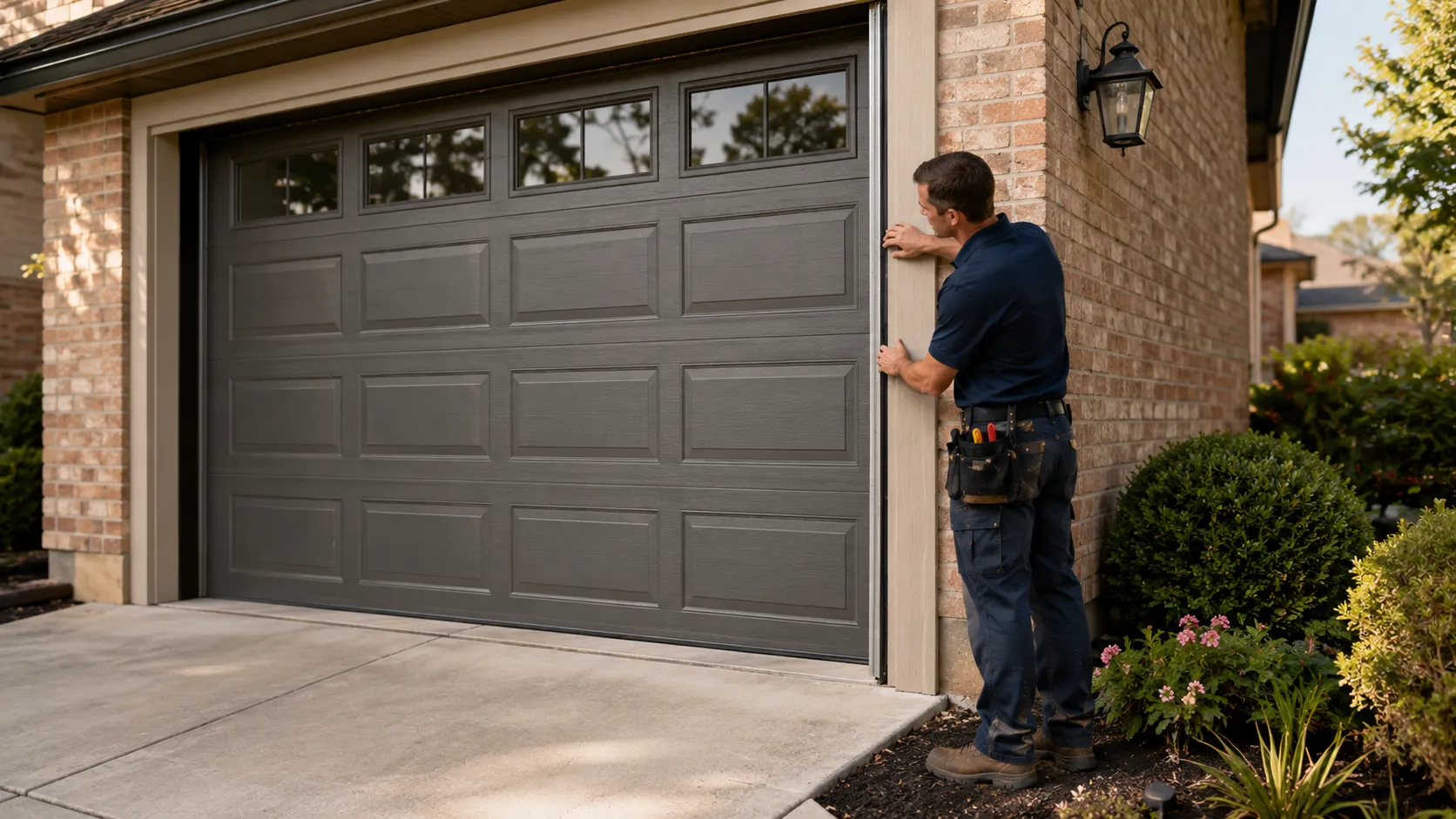
We're not dealing with hurricane damage or desert heat cracking panels. The failure mode here is slower and quieter: rust bloom on spring coils, hinges that seize just enough to throw the door off balance, and weatherstripping at the bottom panel that hardens and splits after a few winters of freeze-thaw. None of that shows up as a single dramatic breakdown.
It shows up as a door that's noticeably louder, or slightly crooked, six months before it actually fails. That's the pattern a call in this area is built around.
The Problem
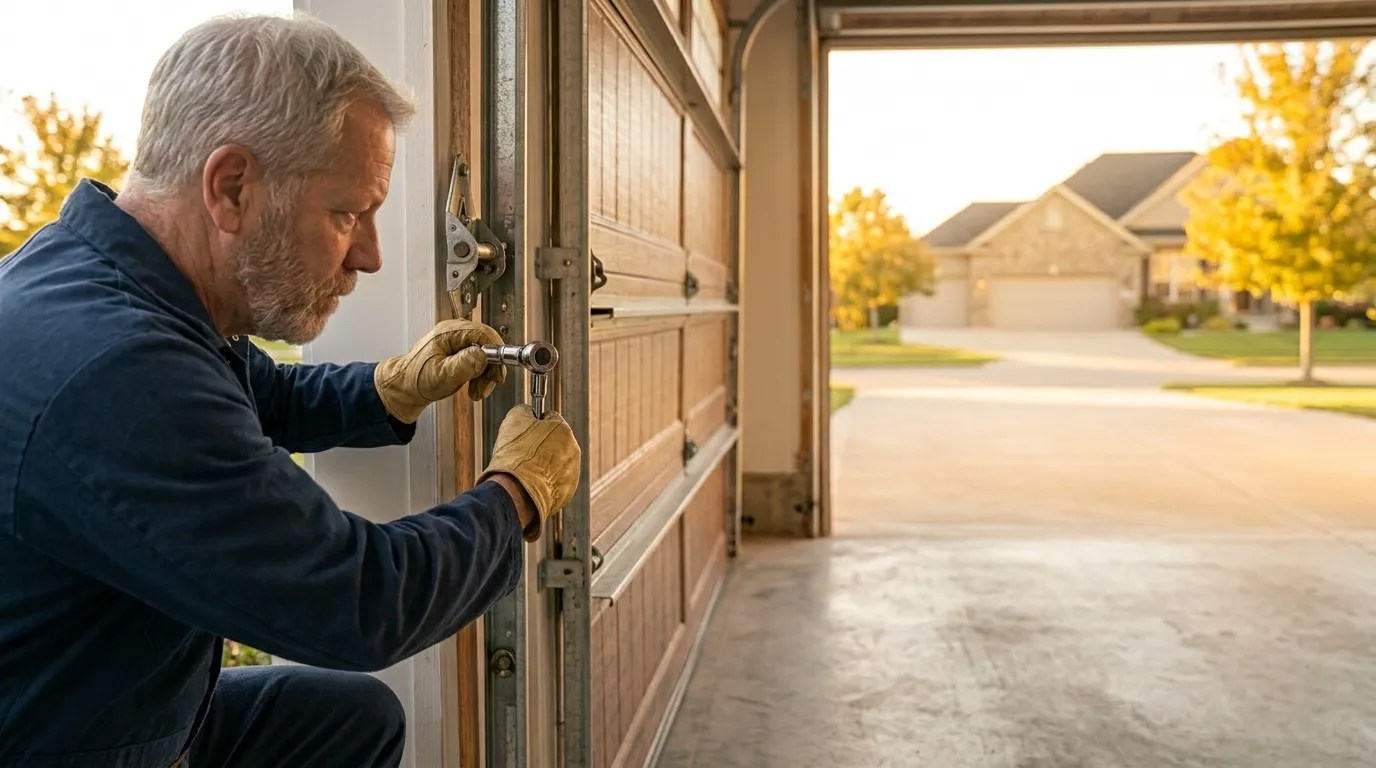
Most of the housing stock in this service area went up between 1964 and 2006, with the bulk of it dating to the 1980s and 90s across the 34 named neighborhoods we cover, from Palisades and Forest Highlands close in to farther-out areas like Sherwood and Newberg. A door installed during that build wave is now 25 to 45 years old even if it's had a motor swap or two along the way. The steel gauge, the spring wire, and the track hardware from that era weren't built for a 50-year service life.
The specific problem we run into on a call is usually one of two things: original torsion springs that have never been replaced and are well past their cycle count, or a track system that's been re-shimmed and adjusted so many times over the decades that it's out of true. Neither of those is an emergency on the day you call. Both of them are the reason the door groans, drifts, or reverses on its own before something actually breaks.
What to Check
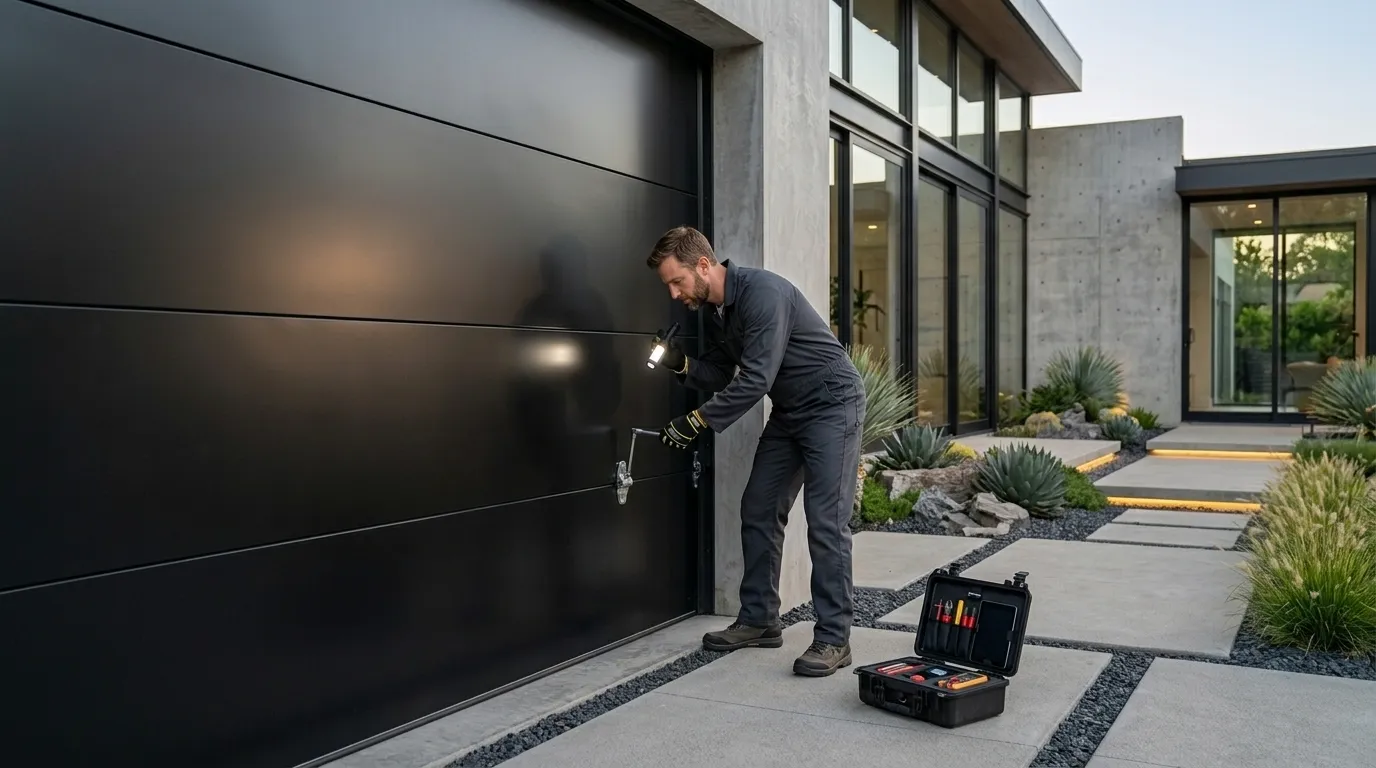
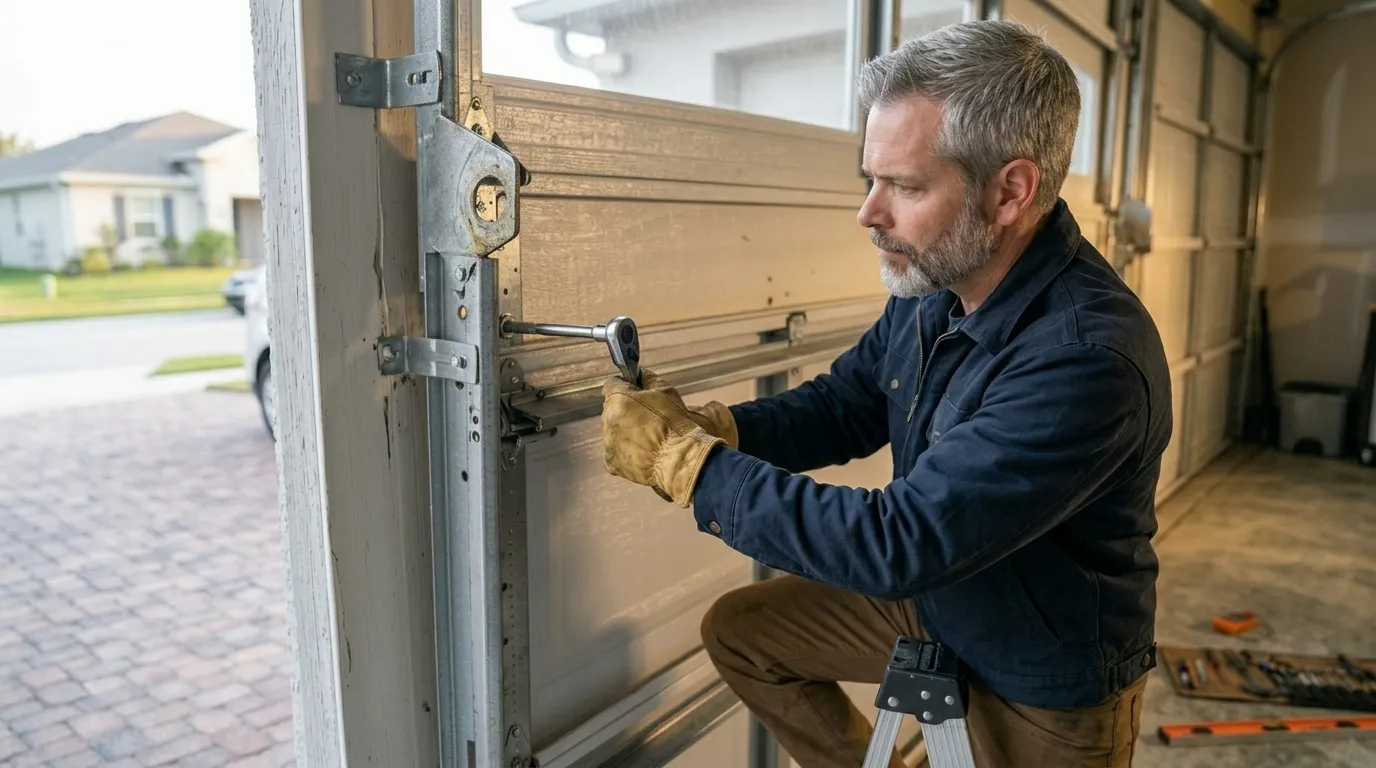
On a service call we start with the balance test: disconnect the opener, lift the door by hand to waist height, and see if it holds. If it drops or shoots up, the springs are compensating wrong for the door's weight, which is common once original spring steel from the 1980s-90s stock starts to fatigue. Next we check the track alignment with a level, since a lot of these older installs have tracks that were never perfectly plumb to begin with and have shifted further with decades of freeze-thaw movement in the framing.
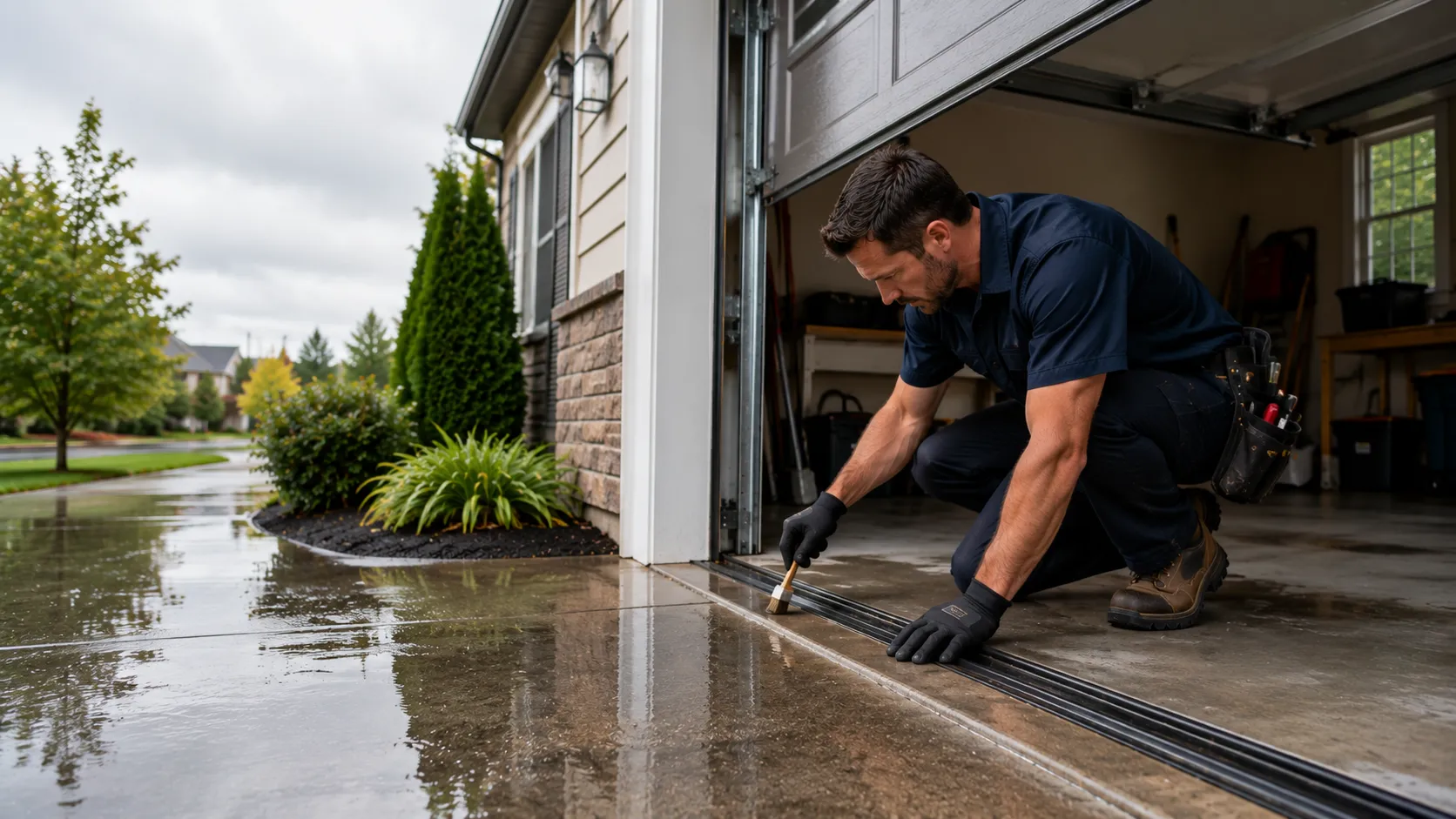
We also look at cable fraying near the drum, since cold makes cable more brittle, and at the bottom seal, since Lake Oswego's damp winters are what actually degrade rubber weatherstripping rather than any impact damage. Roller condition gets checked by hand, not just by sound, because a bearing can be seized enough to strain the opener motor while still turning quietly. Last is the opener's force setting, which drifts out of spec over years and is a common reason doors reverse on cold mornings.
Leaving It Alone
Not every noise or slow-down needs a same-week fix. If your door is from the original 1980s-90s build and the springs still hold balance in the hand-lift test, we're not going to tell you to replace them just because of their age. A spring that's still balanced and not visibly rusted through the coils can run another season, and we'll say so on the invoice.
Where we draw the line is track alignment and cable condition, because those don't get safer with time in this climate; they get worse every freeze-thaw cycle. Here's the honest limitation: if the door itself is original steel from that 1964-2006 build window and the panels are dented or rusted through at the bottom, we're not going to spend your money patching a 40-year-old door section. At that point a full door replacement usually costs less over five years than repeated panel and hardware repairs, and we'll tell you that plainly instead of billing for a patch job.
How We Can Help
Garage Door Repair
Springs, cables, tracks, rollers, and openers fixed by a tech who explains the problem before touching anything.
Learn more →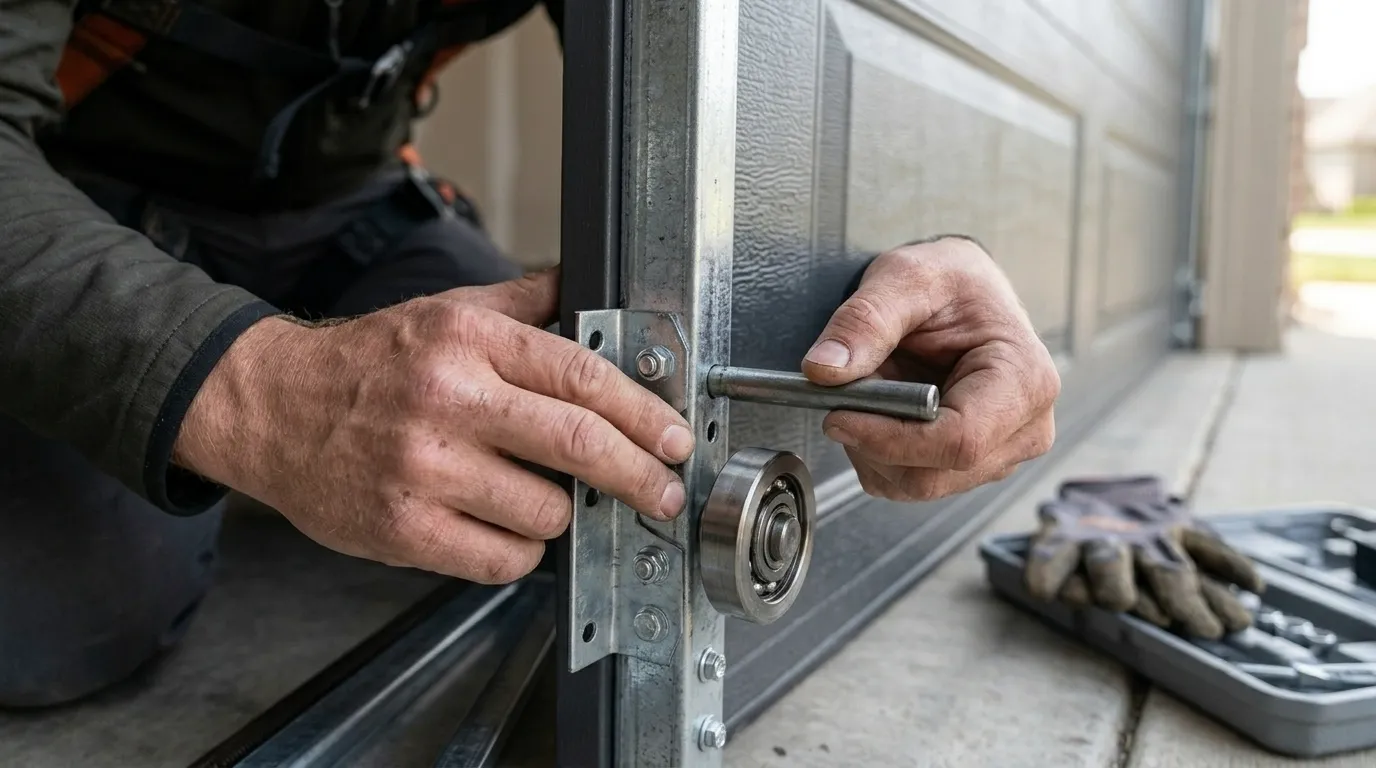
Garage Door Installation
New sectional doors sized and installed for the housing stock actually built in this area.
Learn more →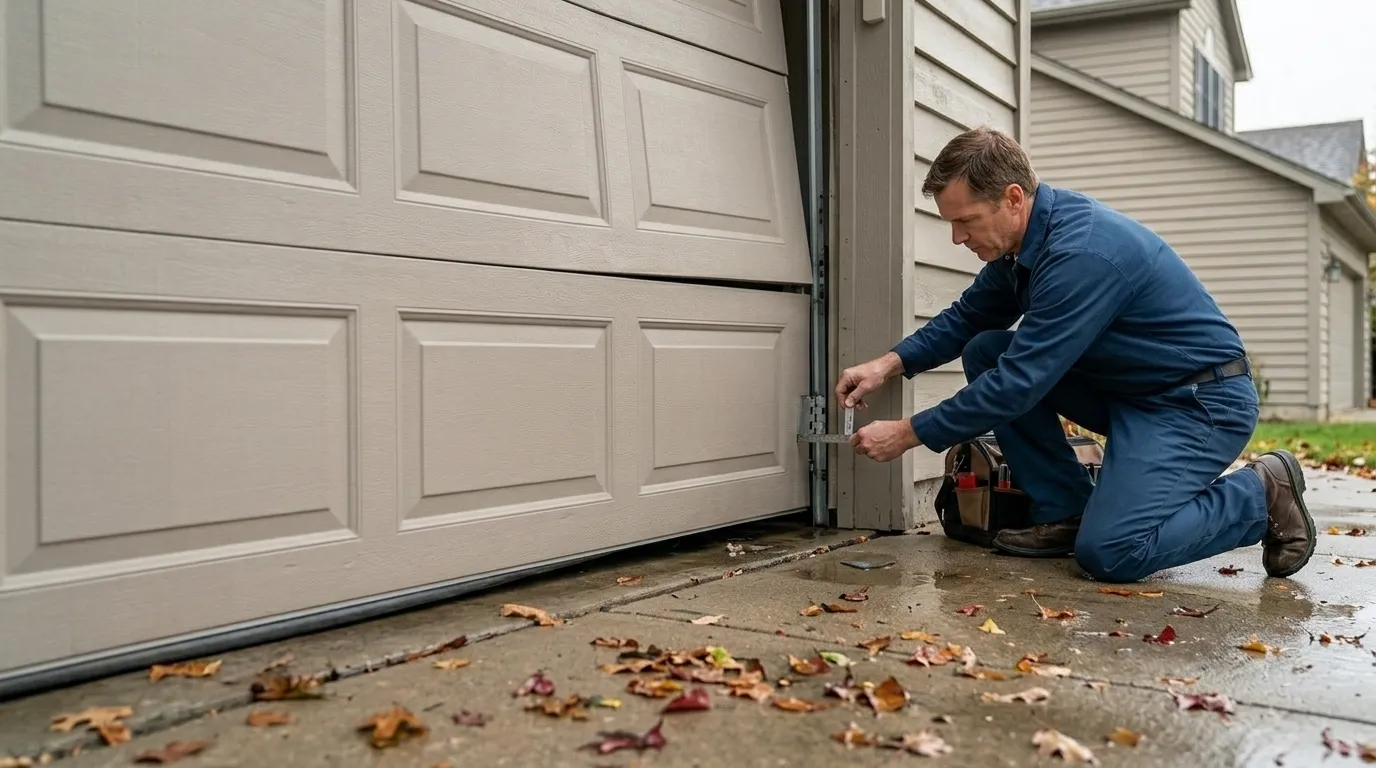
Garage Door Service
Tune-ups, lubrication, and safety checks that catch a small problem before it becomes a service call.
Learn more →Frequently Asked Questions
Is my garage door too old to repair?
Not automatically. Age alone isn't the deciding factor. If your door dates to the 1964-2006 building wave common in this area and the panels are solid with no rust-through, a spring or roller repair is usually worth it. If the steel itself is failing, replacement is the more honest recommendation.
Why does my door act up more in winter?
Lake Oswego's cold-moderate climate means repeated freeze-thaw swings, which stiffen spring steel, seize rollers, and shrink or swell wood framing around the track brackets. That's why doors that ran fine in summer suddenly bind, groan, or reverse once temperatures drop.
What does a standard service call actually include?
A balance test with the opener disconnected, a track alignment check with a level, an inspection of cables near the drum for fraying, a check of roller bearings by hand, and a review of the opener's force settings. We tell you what's urgent and what can wait.
Do you serve areas outside Lake Oswego proper?
Yes, we cover the surrounding area including places like Stafford, Oak Grove, Metzger, and further out to West Linn, Milwaukie, and Sherwood. Distance from Lake Oswego runs from about 1 mile up to roughly 19 miles depending on the neighborhood.
Have a Door That Needs a Second Opinion?
Call and describe what it is doing - we will tell you what it likely is.