
Lake Oswego Garage Door Guide
What Your Garage Door Noise Is Actually Telling You
A grinding, popping, or slapping garage door in Lake Oswego usually traces back to 1980s-era hardware and our wet, freeze-thaw winters. Here's what each sound is telling you.
- Licensed & Insured
- Same-Area Service Calls
- Upfront Pricing
What the Weather Here Does to It
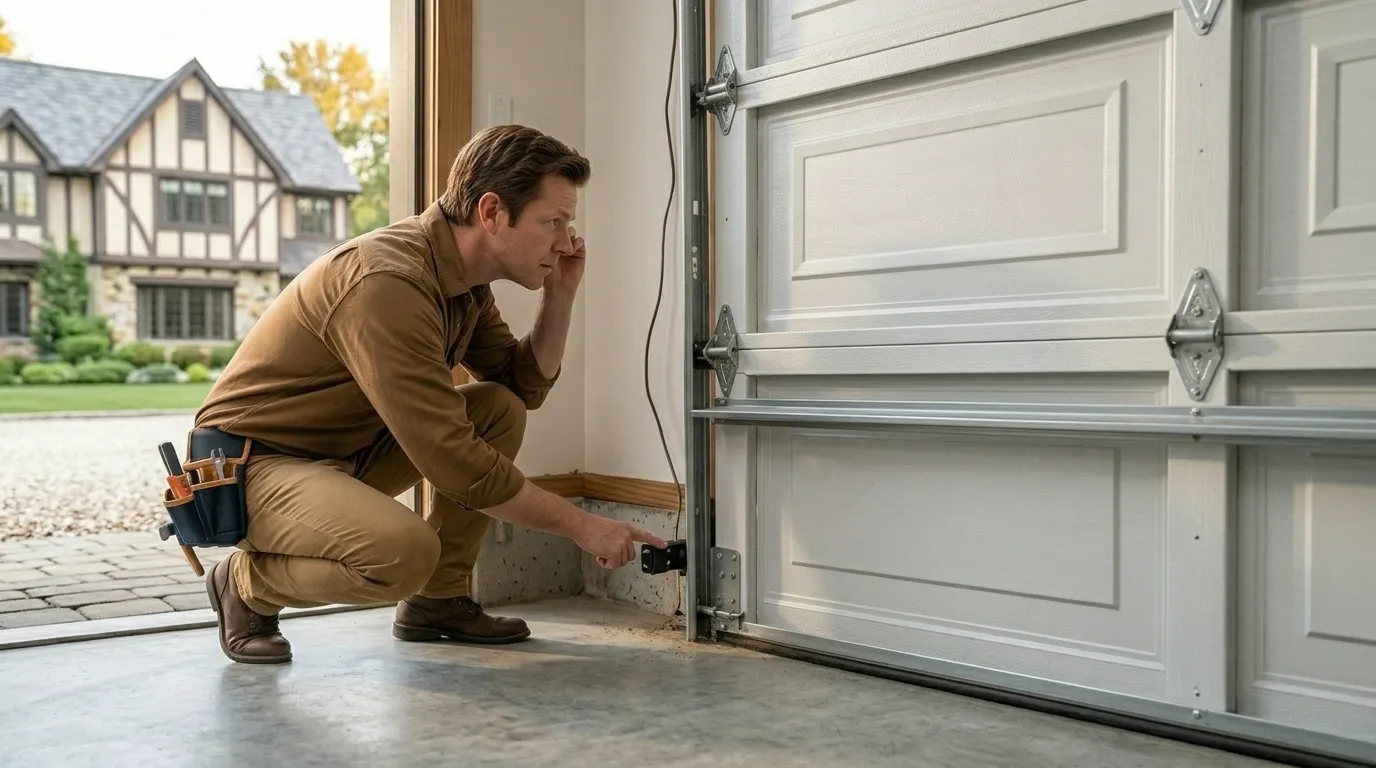
Lake Oswego sits in a cold-moderate climate band, which means the door in your garage isn't dealing with a single hard winter freeze so much as a long stretch of damp cold, condensation, and repeated freeze-thaw swings through the fall and winter months. That cycle is hard on anything metal-on-metal. Track bolts loosen as wood framing swells and shrinks with moisture.
Steel rollers pick up surface rust where water sits in the track after a wet week. Torsion springs lose a little wind tension every time cold contracts the coil and a warm afternoon lets it relax again. None of this happens all at once.
It's slow, and that's exactly why the first sign most owners get is a sound, not a failure. A door that opened silently in August starts groaning by January, and that groan is the moisture and temperature swing working on hardware that was fine the season before. It's also why lubrication schedules that work in a dry climate don't hold up here - anything you put on a track or hinge gets washed thin faster in a cold, wet winter than it would somewhere drier.
The Problem
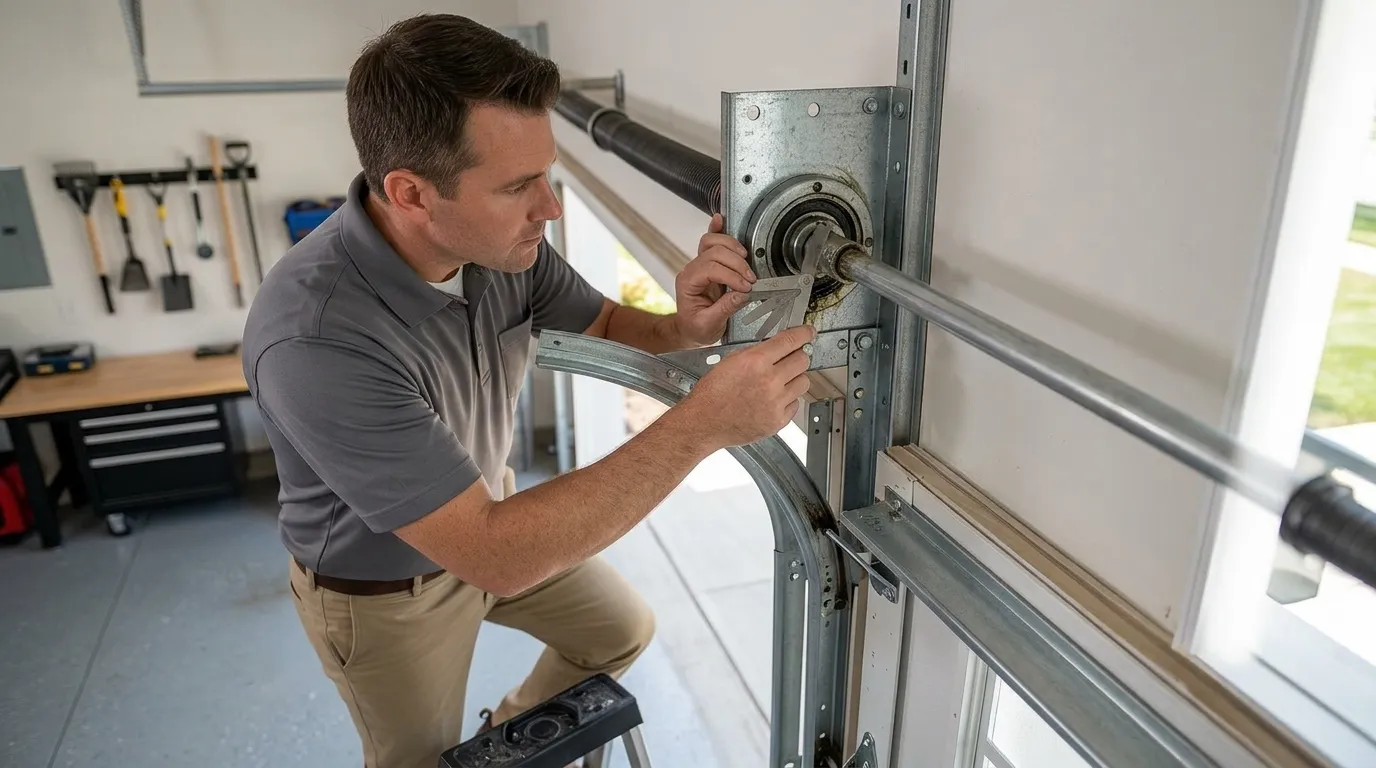
Housing across this service area was mostly built between 1964 and 2006, with the bulk of it going up in the 1980s and 90s - median year 1983. That matters for garage doors because a door and opener installed with the house, or replaced once in the 2000s, is now old enough that its springs, rollers, and cable drums are past the point where quiet operation is normal. A torsion spring rated for a certain number of cycles doesn't fail on a schedule; it fails when it fails, and a door from that era is well into its working life.
The other piece is that a lot of these houses share the same builder-grade opener and hardware specs, which means the same parts are wearing out at roughly the same time across a lot of driveways at once. A slapping noise on lift, a grinding on the way down, a rhythmic thump every few feet of travel - on a door this old, those aren't random annoyances. They're the specific parts installed in the 80s and 90s telling you which one is going first.
What to Check
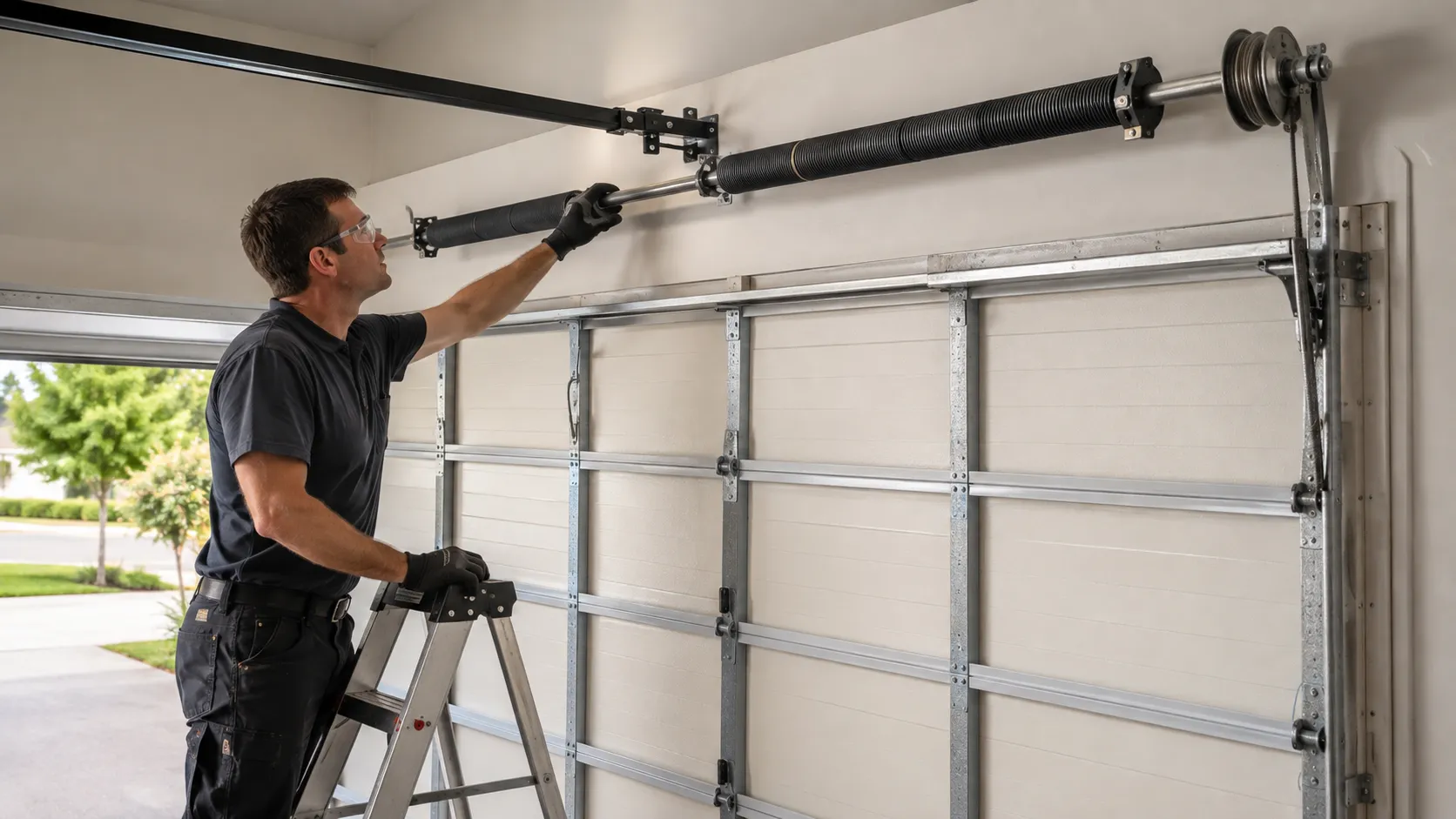
A hard metallic pop, usually loud enough to hear from inside the house, is almost always a torsion spring letting go - don't run the opener again until it's replaced. A rhythmic thump as the door travels is often a flat spot on a roller or a bent track section, both common once rollers pass the age this housing stock is at. Grinding on the way up points to a worn opener gear, not the door itself.
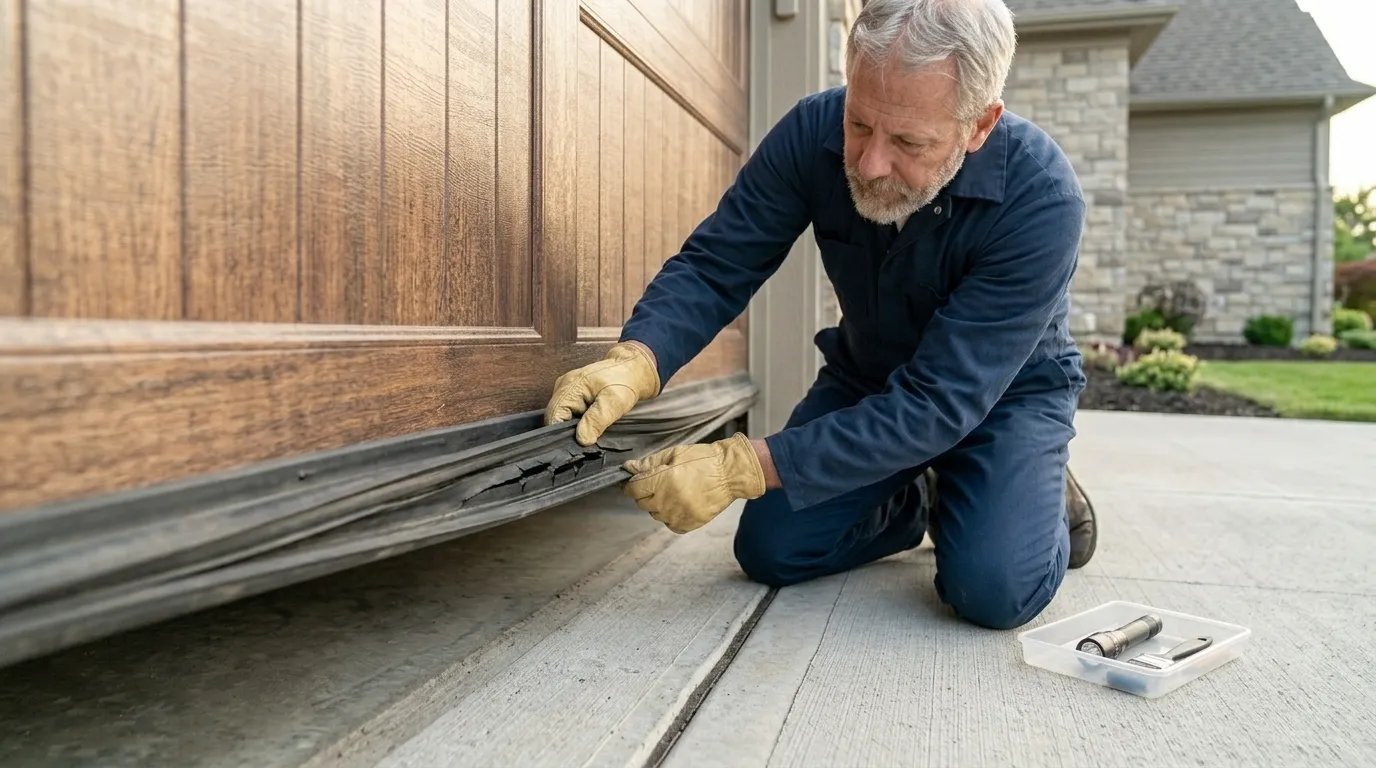
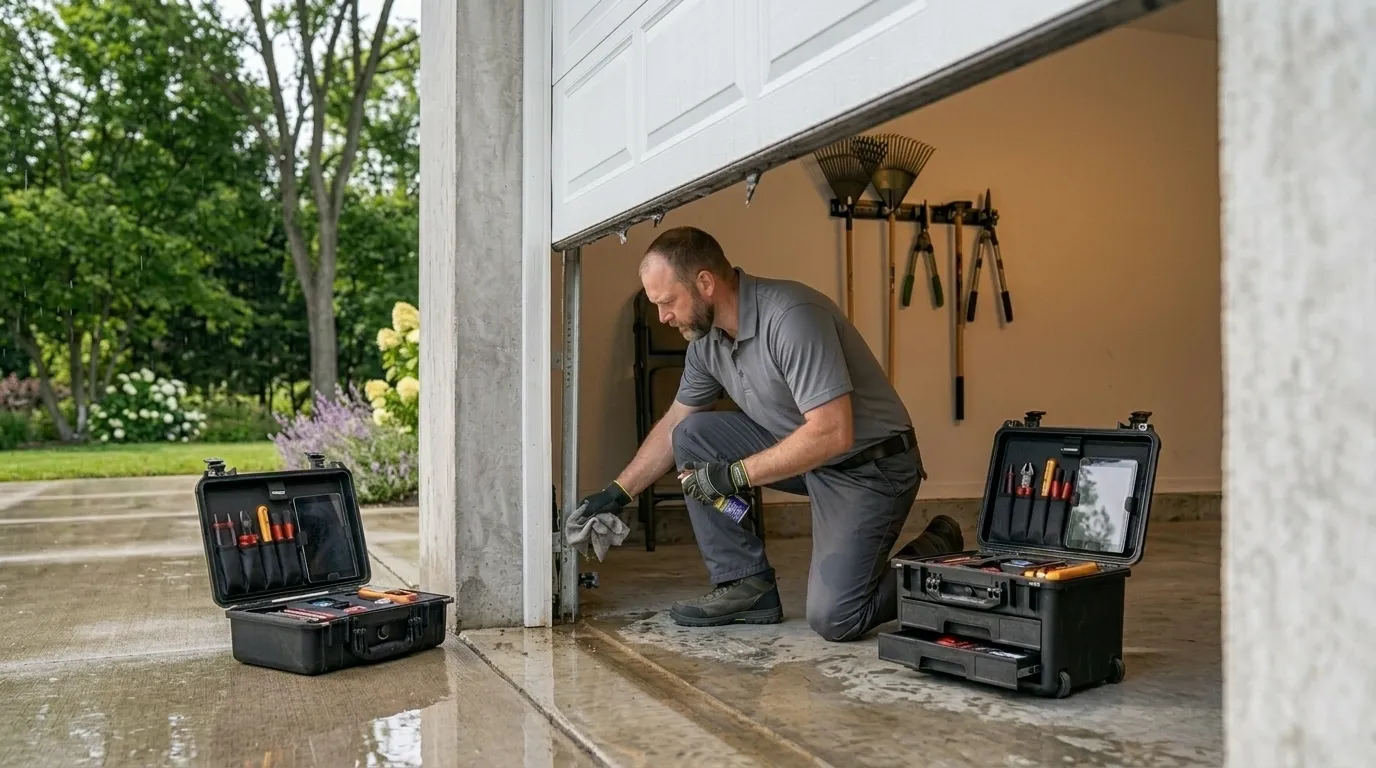
A metallic scraping specific to cold mornings, that quiets once things warm up, is usually a track that's picked up surface rust from winter moisture and needs a wipe-down and fresh lube, not a replacement. Slapping cables against the track mean the cable's come loose from the drum - stop using the door and get it looked at, since a loose cable under spring tension is a safety issue, not just a noise. If the sound only shows up on the coldest days, that's the freeze-thaw cycle working on already-loose hardware.
If it's constant regardless of weather, the part itself has failed.
Leaving It Alone
Some of these noises are fine to live with for a while - a squeaky hinge that just needs oil isn't an emergency, and we'll tell you that instead of billing you for a call. What isn't fine is running a door with a popped spring, a loose cable, or a bent track, because at that point the opener is doing work the hardware can't safely handle, and something eventually gives at the worst moment. One honest limitation: if your door and opener both date to the original build, and you're now hearing more than one of these problems at once, patching the loudest one usually just moves the failure to whichever part goes next.
At that point replacement of the aging components costs less over a year or two than repeated service calls on 1980s hardware. We'll tell you which situation you're in rather than guess.
How We Can Help
Garage Door Repair
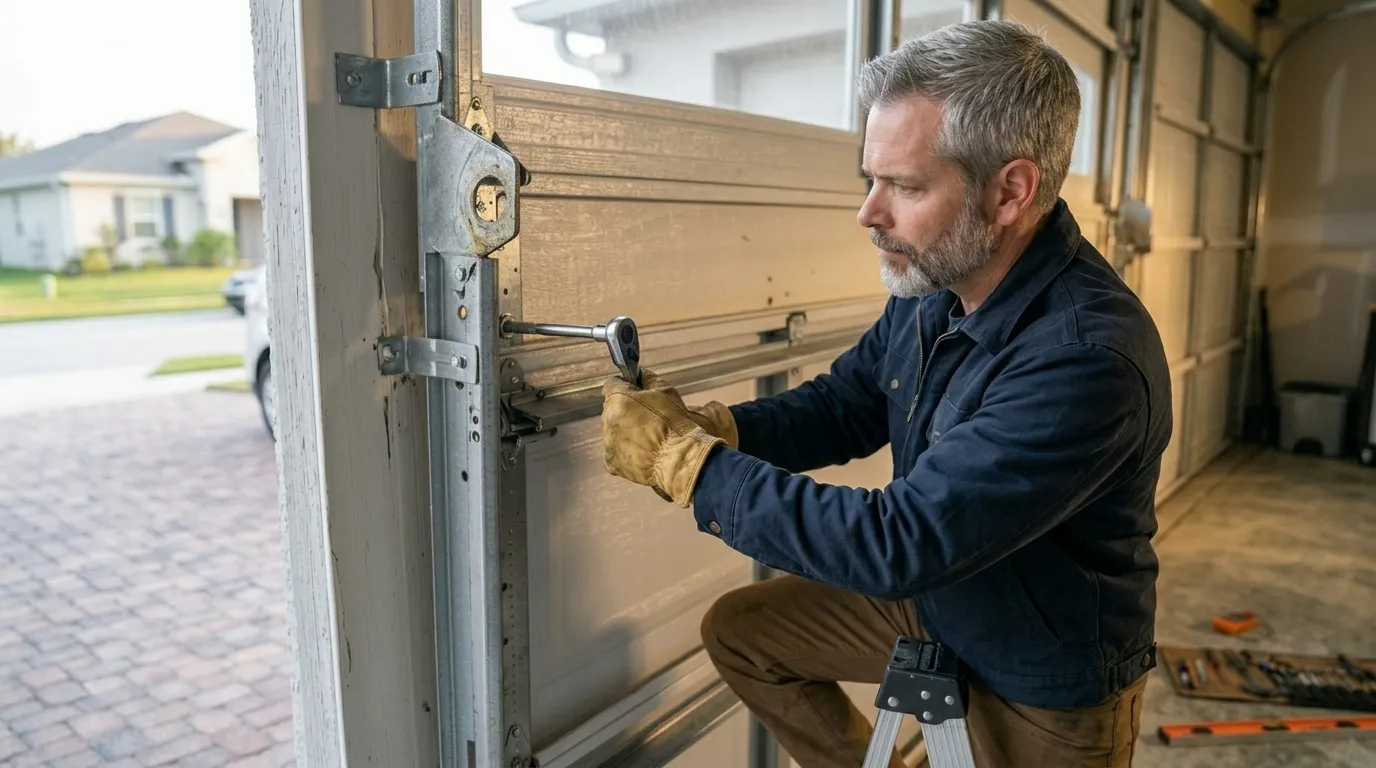
Springs, cables, tracks, rollers, and openers fixed by a tech who explains the problem before touching anything.
Learn more →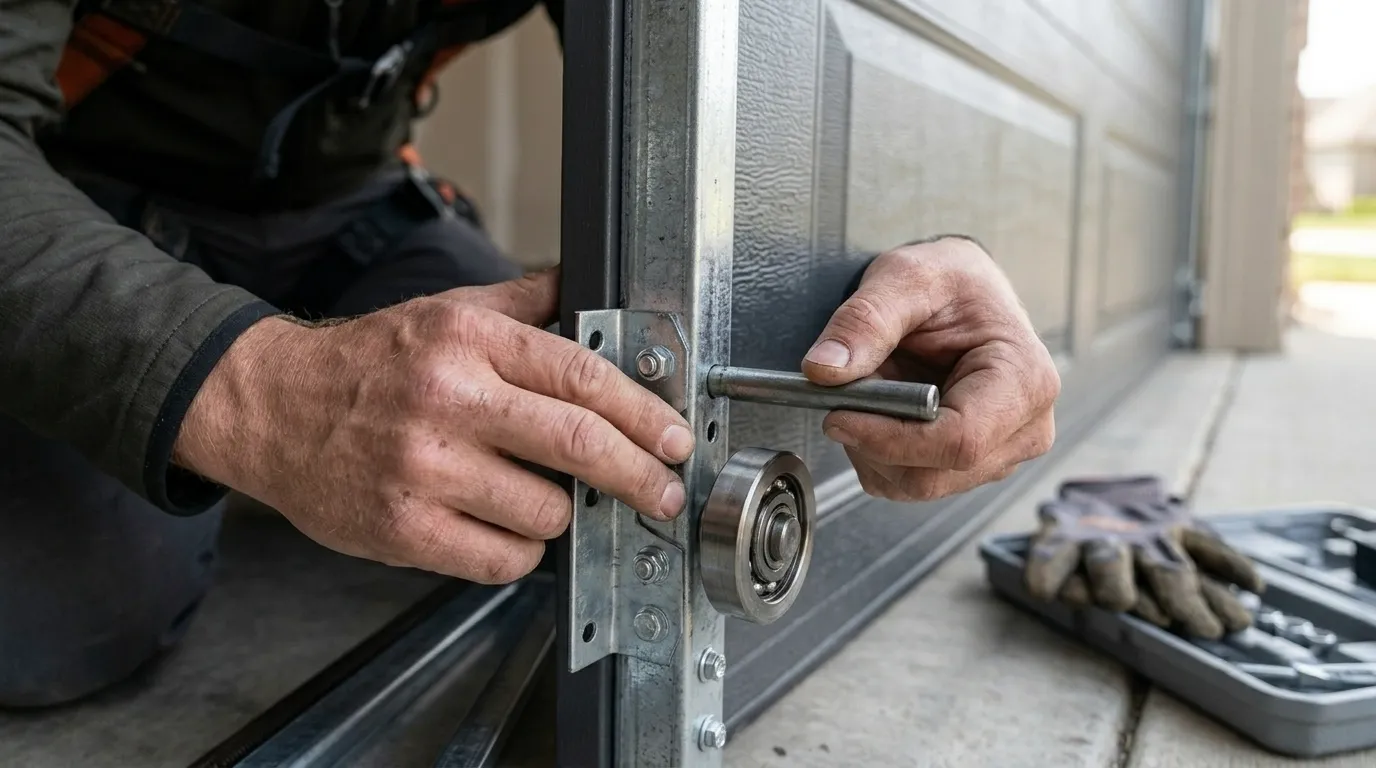
Garage Door Installation
New sectional doors sized and installed for the housing stock actually built in this area.
Learn more →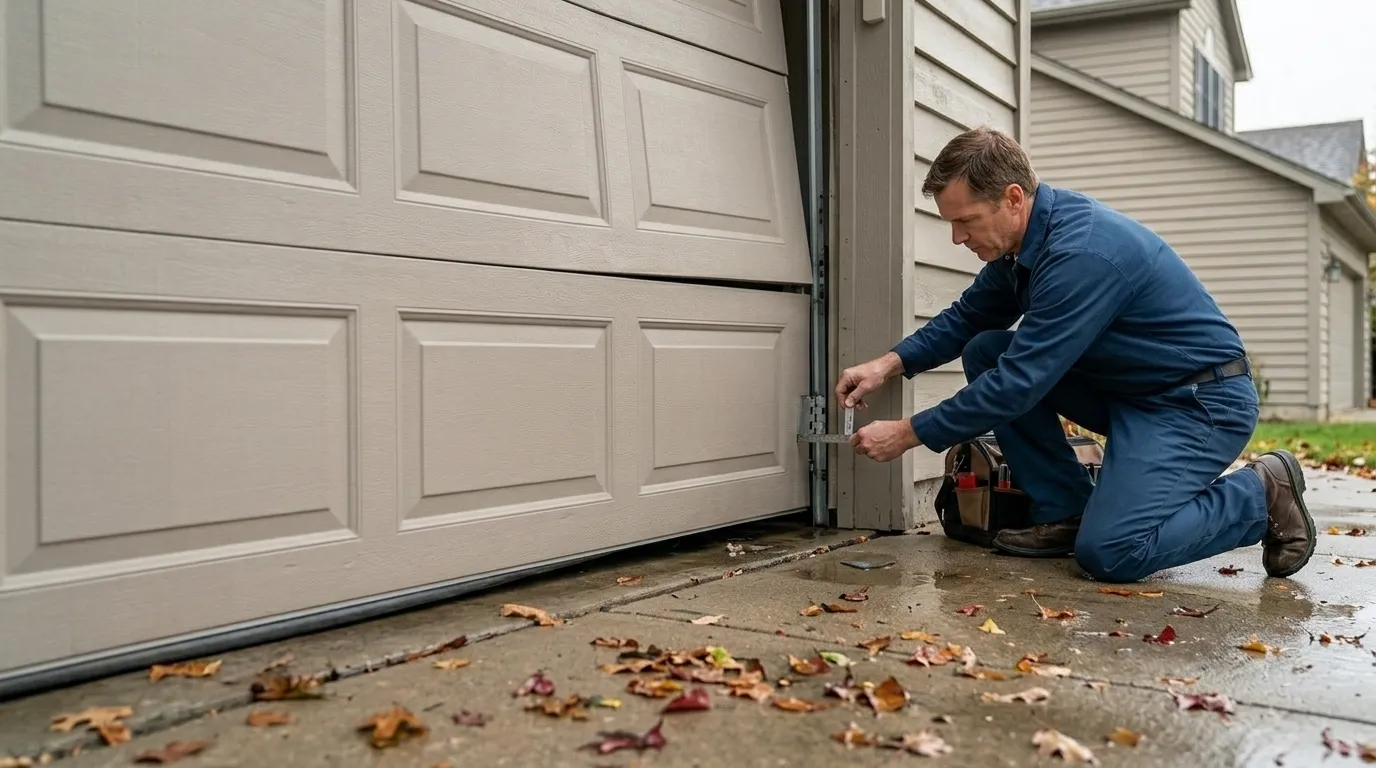
Garage Door Service
Tune-ups, lubrication, and safety checks that catch a small problem before it becomes a service call.
Learn more →Frequently Asked Questions
My garage door makes a loud pop and then won't open. What happened?
That's almost certainly a broken torsion spring, the loud pop is the coil letting go under tension. Don't try to force the door open or run the opener again. It's a common failure point on hardware from the 1980s and 90s building era common in this area, and it needs a spring replacement, not a lubrication fix.
Why does my door only grind in cold weather?
Cold, damp winters here cause surface rust and hardware contraction that shows up as noise on the coldest mornings and quiets once things warm up. It's a symptom of moisture cycling in the track, not a sign the door is about to fail, but it's worth cleaning and relubricating before it wears the roller further.
Is it worth repairing a door from the original house, or should I replace it?
Depends on what's failing. A single worn part on an otherwise sound door from this era is usually worth fixing. If you're hearing multiple different noises at once, the hardware as a set is reaching the end of its working life, and repeated repairs will likely cost more over time than replacing the aging components together.
How often should I check my garage door hardware?
With the freeze-thaw cycling typical of winters here, a visual check of rollers, track, and visible spring coils each fall before the wet season sets in catches most problems while they're still a lubrication fix instead of a repair call.
Have a Door That Needs a Second Opinion?
Call and describe what it is doing - we will tell you what it likely is.