
Lake Oswego Garage Door Guide
When the Power Drops, Your Opener in Lake Oswego Is the Weak Link
Lake Oswego homes built between 1964 and 2006 run openers that predate battery backup. Here's what winter power cuts do to them and what to check before the next outage.
- Licensed & Insured
- Same-Area Service Calls
- Upfront Pricing
What the Weather Here Does to It
Lake Oswego sits in a cold-moderate climate band, which around here means wet, wind-driven storms through the winter months rather than deep freezes. Those storms are what take the power out, not the temperature.
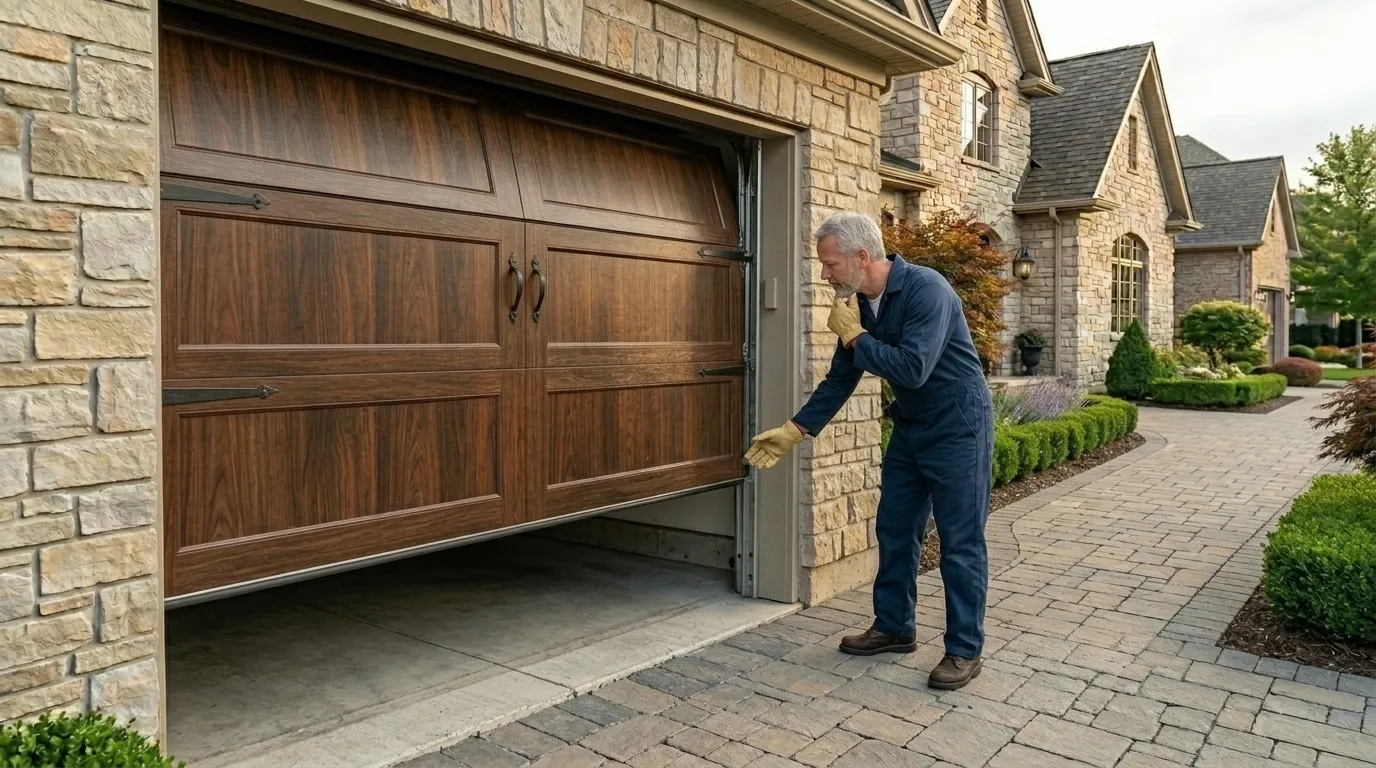
When the grid drops for a few hours during a windstorm, a garage door opener with no battery backup just stops. It doesn't fail gracefully - it stalls wherever it was in its cycle, which is often half-open if someone was heading out when the lines went down.
Most of the housing stock in this service area went up between 1964 and 2006, with the bulk from the 1980s and 90s across the 34 named areas we cover, from Palisades and Forest Highlands close in to Bethany and Cornelius further out. That means a lot of openers installed new with those houses, or replaced once already, sitting on circuits that were never wired with an outage in mind. Nobody thought about battery backup when a 1985 build got its opener - it wasn't standard equipment then, and a lot of them still aren't.
The practical result: a wind event knocks the power out, and the door that was working fine an hour ago won't budge, with a car on the wrong side of it.
The Problem
An opener without battery backup has exactly one way to open the door when there's no power: the manual release, the red cord hanging from the trolley. Most homeowners have pulled it maybe once, if ever, and a lot of them don't know where the emergency disconnect is on the wall-mounted unit either.
The second problem is what happens after the power comes back. A door left half-cycled during an outage can re-engage in a bad position, especially on older units without a way to relearn where up and down actually are. On houses from the 1980s and 90s stock common through this area, that's often a chain-drive opener with limited or no self-diagnostic behavior - it just tries to run the same motor command it was given, whether or not the door is actually clear to move.
We're not saying every outage ends in a broken door. Most don't. But the combination of older opener hardware and a climate that produces regular winter power cuts is a real pattern here, not a hypothetical.
What to Check
Find your manual release cord now, not during the next outage. It's the cord with the red handle hanging from the track near the top of the door. Pulling it disconnects the trolley from the opener so you can lift the door by hand.
Check whether your opener has a battery backup unit - it's usually a separate box mounted next to or below the main opener head, about the size of a car battery. If your house was built in the earlier part of that 1964 to 2006 range and the opener hasn't been replaced, there's a decent chance it doesn't have one.
After any outage, watch the door's first full cycle. If it stops short, reverses unexpectedly, or makes a grinding noise it didn't make before, don't run it again - that's the opener trying to relearn a position it lost.
Leaving It Alone
Not every opener needs a battery backup added. If yours is newer, already has one, or you rarely lose power for more than a few minutes, spend your money elsewhere. Adding backup power to an opener that's near the end of its life anyway is a waste - if the motor or gears are already worn, you're better off replacing the whole unit rather than patching in a battery for a machine you'll swap out in a year or two.
We also won't tell you every stall during an outage means something's broken. Most of the time the door just needs to be run through a normal cycle once power is back and it sorts itself out.
Call us when it doesn't - when the door won't take a command at all, or the manual release is stuck, or the motor runs but the door doesn't move. That's a different problem, and it's worth a look before the next storm finds it for you.
How We Can Help
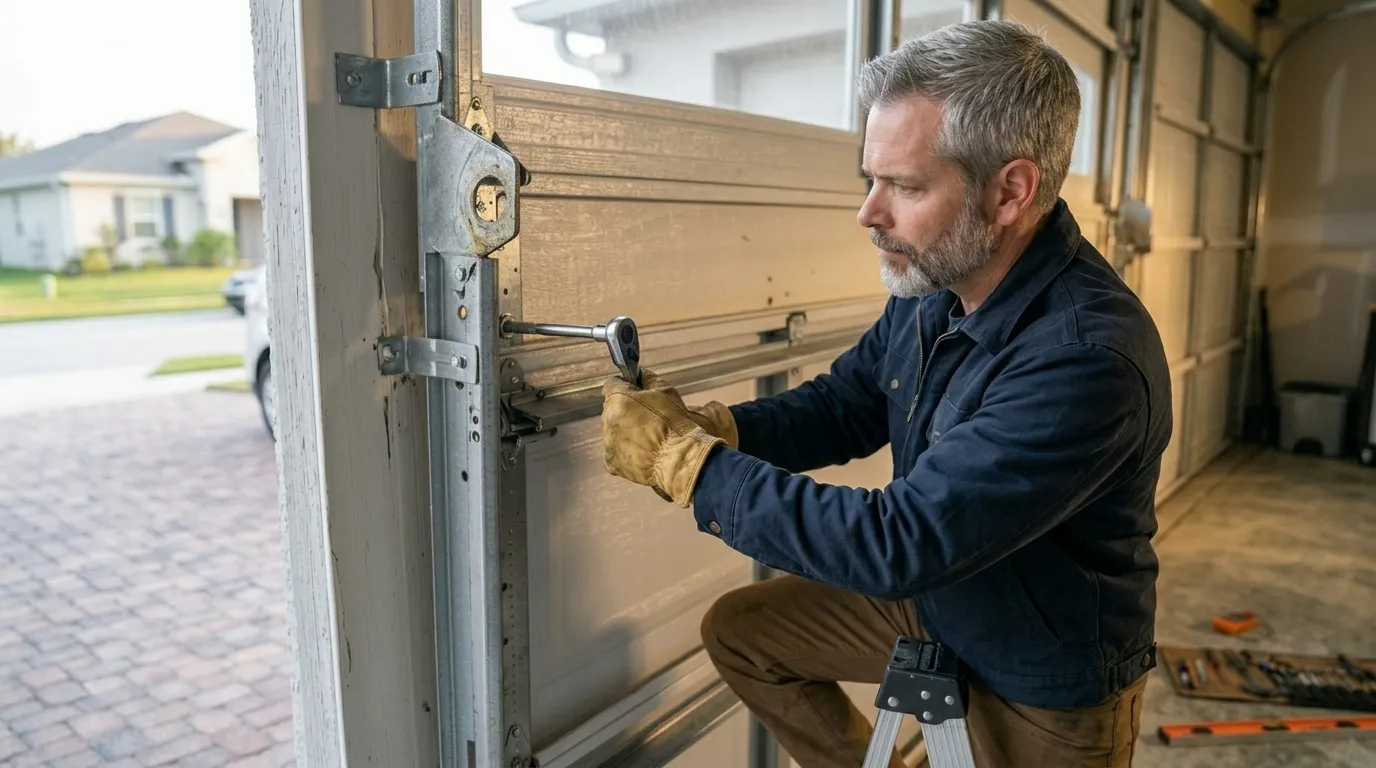
Garage Door Repair
Springs, cables, tracks, rollers, and openers fixed by a tech who explains the problem before touching anything.
Learn more →
Garage Door Installation
New sectional doors sized and installed for the housing stock actually built in this area.
Learn more →
Garage Door Service
Tune-ups, lubrication, and safety checks that catch a small problem before it becomes a service call.
Learn more →Frequently Asked Questions
Why does my garage door opener stop working every time the power goes out?
If your opener doesn't have a battery backup unit, it has no power source once the grid drops. Given how much of the housing here dates to the 1980s and 90s, a lot of openers were installed before battery backup was standard, so this is common across the area.
How do I open my garage door by hand during an outage?
Pull the red manual release cord hanging from the trolley near the top of the door. This disconnects the opener so you can lift the door manually. Find it now, before you need it in the dark during a storm.
Should I add a battery backup to my existing opener?
Depends on the opener's age and condition. If it's newer or rarely without power for long, it's probably not worth it. If it's older and the motor is already showing wear, replacing the whole unit usually makes more sense than adding backup power to it.
Have a Door That Needs a Second Opinion?
Call and describe what it is doing - we will tell you what it likely is.